Understand key differences between an externship vs internship to choose the right path for practical experience, industry insights, and a competitive career edge.
Confused about externship vs internship? Know the key differences and decide which opportunity is right for you to gain valuable experience and boost your career.
An externship is a short-term shadowing experience, usually lasting a few days to a few weeks, where you observe professionals at work to get a real feel for a career before committing to it. An internship runs much longer, typically several months, and puts you in the middle of actual work, building the skills and experience your resume needs. Still figuring out what field you want to be in? Start with an externship. Ready to go deep and build something concrete? An internship is the better move.
Introduction
Pay is one of the clearest differences between the two. Around 60% of internships are paid, with an average hourly rate of $20.76 according to NACE 2023 data. Externships are almost always unpaid, which makes sense given that you are there to observe and learn rather than produce work output.
Put simply, if you want hands-on experience that builds your resume and opens doors to job offers, go with an internship. If you are still exploring what field you actually want to be in, an externship gets you there faster and with far less commitment.
What Is An Internship?
An internship is a structured work program where students or recent graduates gain real, hands-on experience inside a company or organization. You are not just watching from the sidelines. You are contributing to actual projects, getting feedback from professionals, and building the kind of work history that shows up on your resume. Most internships last anywhere from 10 to 16 weeks, though some co-op programs run six months or longer.
Companies also treat internships as a long-term hiring pipeline. Many interns receive full-time job offers from the same employer after graduation, which is why landing a strong internship early in college can shape your entire career path.
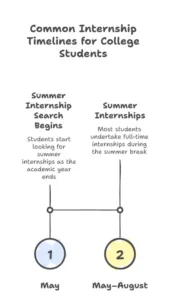
Most students pursue internships during college, and the timing usually follows the academic calendar. Summer internships (June–August) are the most competitive and typically run 10–12 weeks. Spring and fall semester internships run alongside your coursework, usually 15–16 weeks at reduced hours. If your school has a co-op program, you may alternate full semesters of work and study for up to six months at a time.
How Do I Get An Internship?
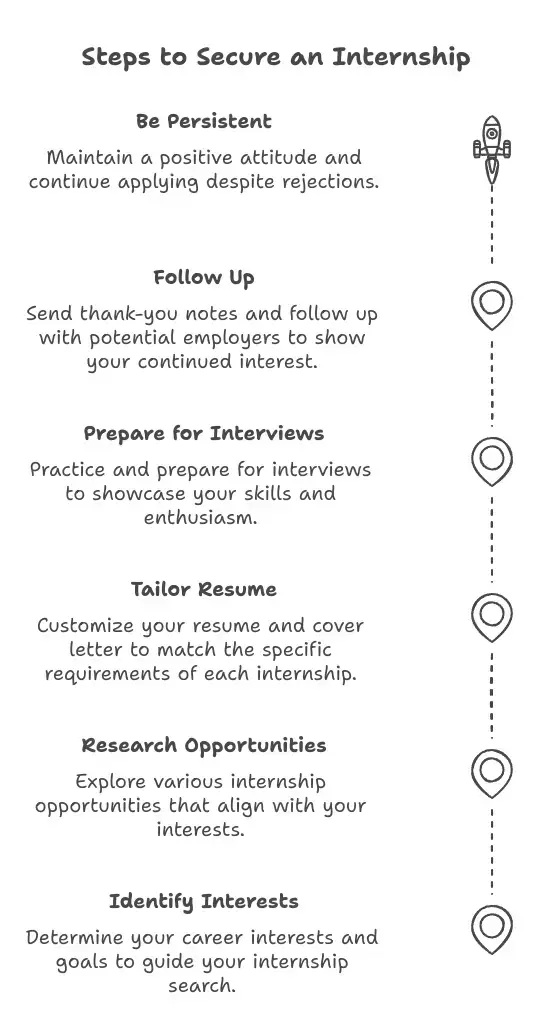
Securing an internship involves preparation and proactive effort. Follow these steps to increase your chances of success:
Identify your Interests: Determine the industries and roles that align with your career goals.
Update Your Resume: Highlight relevant skills, achievements, and academic background. For internships, emphasize any coursework, projects, or past work experience that shows you can contribute from day one.
Write a Cover Letter: Customize each application to showcase your enthusiasm and qualifications.
Use Job Search Resources: Explore job portals, company websites, and college career centers for openings.
(NOTE)
Network: Connect with professionals through LinkedIn, alumni networks, or career fairs.
Apply Strategically: Submit applications to positions that match your skills and aspirations.
Prepare for Interviews: Research the company and role, practice answering common questions confidently.
Follow Up: Send thank-you emails after interviews to express your interest and appreciation.
Stay Persistent: Keep applying and refining your approach until you secure the ideal internship.
If you are a high school junior or senior thinking ahead, now is the right time to build the resume and academic record that opens up competitive internship applications. The earlier you start, the more options you will have when it counts.
What Is An Externship?
An externship is a short-term shadowing experience where you follow a professional through their actual workday to see what the job really looks like. Think of it as a career test drive. You might spend a week sitting in on client meetings at a law firm, shadowing a doctor through patient rounds, or observing how a software team runs their daily standup. You are there to watch, ask questions, and get a realistic feel for whether this is actually a path you want to pursue. Most externships last a few days to a few weeks and are unpaid. High school students and college freshmen are ideal candidates, because an externship helps you make smarter decisions before you have locked in a major or career path.
How Do I Get An Externship?
Securing an externship involves researching opportunities, networking, and applying to programs that align with your career goals.
Research Opportunities: Search for externship opportunities provided by certain companies, professional organizations, or colleges.
Reach Out to Employers: Contact companies or professionals in your desired field to inquire about externship opportunities.
Leverage College Resources: Use your college’s career services, networking events, and faculty connections to find externship programs.
(NOTE)
Network: Connect with industry professionals on LinkedIn or attend career fairs to learn about externship openings.
Prepare Your Application:Customize your resume and write a concise cover letter showcasing your interest and passion for learning.
(NOTE)
Seek Recommendations: Ask professors or industry mentors for advice or to recommend you for externship opportunities.
Be Open to Different Roles: While externships are typically shadowing roles, being open to a variety of experiences can increase your chances of securing one.
Follow Up: Follow-up with employers after applying or expressing interest to reinforce your enthusiasm and keep your name top of mind.
If you are in high school, do not wait for an official program to find you. Reach out directly to local professionals in fields you are curious about. A short, polite email asking to shadow someone for a day is genuinely how most high school externships get started.
Why Should You Consider Externship?
Externships provide you a competitive advantage in your career as they provide great chances to investigate job opportunities, network professionally, and gain industry knowledge. Below are key reasons why you should consider an externship.
Career Exploration: Externships allow you to explore different industries and roles, helping you decide if a specific career is the right fit.
Networking: They let you network with experts in your industry, thereby creating doors for mentoring or future employment possibilities.
Skill Development: Externships help you build soft skills such as communication, problem-solving, and adaptability in a real-world setting.
Industry Insight: Gain a better understanding of industry practices, workplace culture, and expectations, which can guide your future career decisions.
Resume Enhancement: Even though externships are short-term, they boost your resume by highlighting initiative and exposure to real-world experience.
Increased Job Prospects: Many companies consider high-performing externs for full-time roles, giving you a foot in the door before your job search even officially begins.
Benefits Of An Externship Vs. Internship: Which Is Right For You?
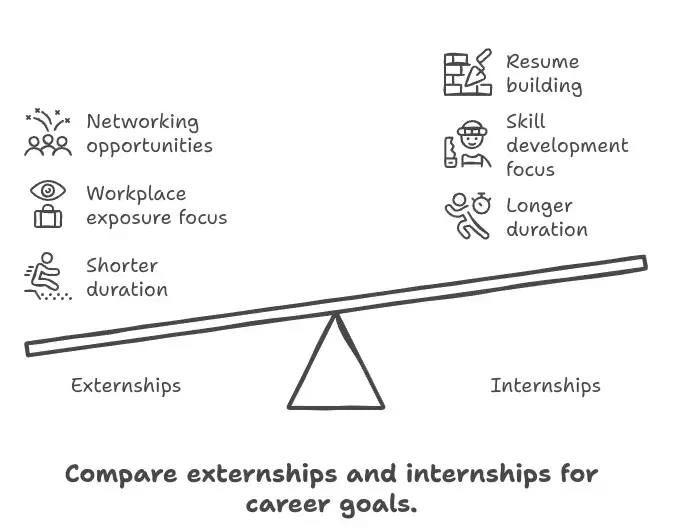
Externships and internships both create opportunities, just at different stages of your career and for different purposes. The table below shows the core differences at a glance. Here is a closer look at what each one actually gives you.
Externship vs Internship: Side-by-Side Comparison
Factor
Externship
Internship
Duration
A few days to a few weeks
Several months (often a full semester)
Type of work
Observation and shadowing
Hands-on project work
Pay
Typically unpaid
Paid or unpaid; ~60% paid (NACE 2023)
College credit
Sometimes available
Sometimes available
Purpose
Career exploration
Skill-building and job readiness
Best suited for
High school / freshman year
Junior / senior year
Job offer potential
Low, observational only
High; many interns get full-time offers
Time commitment
Low, fits around school
Significant, often 20-40 hrs/week
Externship Benefits:
● Short-term commitment (usually a few days to weeks)
● Ideal for career exploration and gaining industry insights
● Limited hands-on work, mostly observation
● Helps build professional connections and networking
● Great for exploring different roles within a field
Internship Benefits:
● Longer-term commitment (usually several months)
● Involves real, hands-on work and learning
● Offers deeper industry experience and job readiness
● More opportunities for networking and building career connections
● Potential for future full-time employment with the company
Your career stage, time availability, and learning goals will determine which one makes more sense right now. Externships are a smart starting point for career exploration. Internships are the better choice when you are ready to build something concrete on your resume.
Although they have different goals and structures, externships vs internships both have special benefits. For those still exploring career paths, externships offer a short-term opportunity to observe professionals and gain industry insights, making them a useful step in career exploration.
Externship Benefits:
Short-term commitment (usually a few days to weeks)
Ideal for career exploration and gaining industry insights
Limited hands-on work, mostly observation
Helps build professional connections and networking
Great for exploring different roles within a field
Internship Benefits:
Longer-term commitment (usually several months)
Involves real, hands-on work and learning
Offers deeper industry experience and job readiness
More opportunities for networking and building career connections
Potential for future full-time employment with the company
Your present professional aspirations, time commitment, and learning style will determine whether you choose an externship vs internship. While internships are better suited for obtaining significant industry experience, externships are a fantastic beginning point for career exploration.
How To Choose Between An Internship And An Externship?
Your professional objectives, available time, and preferred type of experience will determine whether an internship or externship is the right choice for you. Here’s a detailed guide on how to choose between an internship and externship:
Consider Your Career Goals: An externship provides a shorter, less committed experience if you are investigating career paths. For practical knowledge, get an internship.
Time Commitment: Externships are short, usually a few days to a few weeks, which makes them easy to fit around school. Internships run several months and often require 20 to 40 hours a week during summer or across a full semester.
Learning Style: Externships focus on observation and gaining insight, while internships offer practical, project-based experience to develop job-ready skills.
Job Readiness: If you're looking for industry experience to build your resume, internships provide more substantial, applicable skills and exposure.
Networking Opportunities: Internships often offer more opportunities for mentorship, networking, and potential future employment than externships.
Career Stage: Externships are ideal for those early in their career journey, while internships are better suited for those ready to dive deeper into a specific field.
When Should You Do An Externship Or Internship?
Deciding when to pursue an externship vs internship depends on your career goals, educational stage, and desired hands-on experience.
Externship:
The best time for an externship is before you have locked yourself into a direction. That usually means high school or your first year of college. At that stage you do not need deep skills yet. You need exposure. An externship lets you spend a few days inside a real workplace and come out knowing whether that career is actually for you. Low commitment, high clarity.
Internship:
Internships make the most sense in junior or senior year, when you have enough coursework and skills to actually contribute to a team. That is when the experience starts to pay off. You build real skills, develop professional relationships, and put yourself in the running for a full-time offer. Many companies use their internship programs as a direct pipeline into entry-level hiring, so timing it right genuinely matters.
Externships come first, internships come when you are ready to go deeper. There is no rule that says you can only do one. Most students who approach this strategically end up doing both.
Can You Do Both An Externship And An Internship?
Yes, you can complete both an externship and an internship, and in many circumstances it will be advantageous. Here's the justification:
Timing Flexibility: Many internships last for a few months, which makes it easy to fit in an externship. Most externships last for a few days to a few weeks. By doing both, you can get the most experience in a variety of work settings and fields.
Exploration and Experience: Starting with an externship can help you learn about several professions while you are still considering your career routes. After that, you might seek an internship in a field of particular interest for more intensive, practical knowledge.
Increased Networking: Both internship and externship provide significant networking opportunities. By broadening your professional contacts in many fields, both may help you to get referrals or future employment opportunities.
Skill Development: Externships sharpen your ability to observe and give you a clear picture of how professionals operate in real settings. Internships give you the chance to do the work yourself. Together, they build a well-rounded skill set because you understand the environment before you are expected to perform in it.
The key is sequencing them properly. Do the externship first, ideally in high school or freshman year, then use what you learned to target the right internship when you are ready. Students who take this approach tend to go into internships with more clarity, more confidence, and a much better sense of what they want to get out of it. internship when you're ready. Students who take this approach tend to go into internships with more clarity, more confidence, and a clearer sense of what they want to get out of the experience.
How Externships And Internships Impact Your Career Goals?
Externship and internship play a crucial role in shaping your career goals by providing practical experience and exposure to different work environments. Both can significantly impact your career path in the following ways:
Externships Impact:
Career Exploration: Externships help you identify your interests early by allowing you to explore different industries and job roles.
Networking: Although they are temporary, externships provide chances to develop important professional contacts that could influence your future job path.
Informed Decision-Making: Observing industry professionals and workplace environments helps you make well-informed career choices.
Internships Impact:
Hands-On Experience: Internships provide practical, job-specific skills that are valuable in your chosen field, increasing your employability.
Professional Growth: Long-term internships often lead to greater job responsibilities, helping you develop leadership skills and gain experience in a specific role.
Pathway to Full-Time Employment: Many companies hire interns as full-time employees upon graduation, making internships a key stepping stone toward career stability.
Whether you start with an externship or go straight into an internship, both experiences do something a classroom simply cannot. They show you what the work actually looks like and introduce you to people who are already doing it. That combination of clarity and real connection is what shapes long-term career success.
FAQ's
▶ What’s the difference between an internship and an externship?
The difference between internship and externship lies in their duration and focus. Internships are typically longer, offering hands-on work experience within a company, while externships are shorter and more observational, allowing students to gain insights into a profession. Internships often involve project-based tasks, while externships provide exposure to industry practices and networking opportunities.
▶ Are externships paid?
Externships are almost always unpaid. They are short-term and observational, so there is no expectation of work output. The value is in what you learn, not what you earn. Some industries like healthcare or IT occasionally offer paid externships, but that is the exception rather than the norm.
▶ Can I do both an externship and an internship?
You may indeed do both an externship and an internship. While internships are longer, externships are temporary, so finishing both is doable. Combining them improves your CV and strengthens your professional contacts by broadening your knowledge of sectors and employment opportunities.
▶ How long do externships and internships last?
Usually lasting several days to many weeks, externships focus on observation and career research. Usually lasting several months, internships provide greater practical experience. Program determines the length of an internship,often aligning with academic semesters.
▶ Which is better for career advancement: an externship or an internship?
Usually as they provide hands-on experience, job-specific skills, and professional contacts, internships are more suited for career development. More often than not, interns get full-time jobs within the organization. While externships offer valuable learning opportunities, they provide less depth of experience or career possibilities than internships.
▶ Do colleges help students find externships and internships?
Yes, many schools and institutions provide tools to enable students to locate internships and externships. To link graduates with companies, career services departments assist with job placement, provide networking opportunities, and arrange job fairs. To provide special chances, some institutions even form alliances with companies.
Cookie Consent
We use cookies to improve your experience on our site. By using our site, you consent to cookies.