
What Are the Hardest Colleges to Get Into?
Learn about hardest colleges to get into, why acceptance rates are so low, and how students can improve their chances of admission with some practical tips.
Maddie
15 Jan 2026

Learn about hardest colleges to get into, why acceptance rates are so low, and how students can improve their chances of admission with some practical tips.
Colleges are competitive, but some institutions take selectivity to another level. Each year, millions of students apply to elite universities with acceptance rates so low that even top academic profiles face rejection. Let’s understand the hardest colleges to get into and how you can plan smarter and apply more strategically.
Did you know that some of the most prestigious colleges in the United States accept fewer than 1 out of every 20 applicants? Universities like Harvard University and the California Institute of Technology (Caltech) regularly report acceptance rates around 3-4%, making them among the hardest colleges to get into.
According to the National Center for Education Statistics (NCES), millions of students apply to selective and highly selective colleges annually, intensifying competition at top-tier institutions. These colleges evaluate far more than grades and test scores. This guide explores what makes these colleges so competitive, highlights the toughest universities to get into, and offers practical insights to help students build stronger, more compelling applications.
The hardest colleges and universities to get into in the U.S. are globally recognized for academic excellence, research impact, and institutional prestige. Each year, they receive tens of thousands of applications for a limited number of undergraduate seats, resulting in acceptance rates often below 10%, and in some cases, even under 5%.
What makes these colleges especially competitive is their extremely high academic standards, with admitted students typically earning unweighted GPAs of 3.9 or higher.
Because many applicants meet academic benchmarks, standing out requires more than grades alone. Successful candidates demonstrate academic strength, personal growth, and meaningful engagement, making admission to these institutions among the most challenging in the country.
The colleges listed below are widely recognized as the hardest schools to get into, with acceptance rates generally ranging from about 3% to 6%. These institutions receive tens of thousands of applications each year from highly accomplished students worldwide, making admission extremely competitive.
While acceptance rates may vary slightly year to year, all of these universities are known for rigorous academics, holistic admissions, and global prestige.
Harvard is one of the most prestigious universities in the world, known for its academic excellence, influential alumni, and extensive research resources.
Located in Silicon Valley, Stanford is known for innovation, entrepreneurship, and cutting-edge research across disciplines.
MIT is a world leader in science, engineering, and technology, attracting students with exceptional quantitative and analytical abilities.
Princeton combines a strong liberal arts foundation with world-class research, offering close faculty-student interaction.
Yale is known for its humanities programs, residential college system, and focus on undergraduate education.
Located in New York City, Columbia offers academic rigor combined with urban research and global engagement.
Caltech is a small but elite institution focused almost entirely on science and engineering.
The University of Chicago is known for its rigorous academics and distinctive essay prompts.
Brown is recognized for its Open Curriculum, which allows students to design their own academic paths.
Duke combines strong academics with research, athletics, and leadership development.
Across all these universities, admitted students typically show academic excellence, sustained extracurricular involvement, leadership potential, and compelling personal stories. Gaining admission requires not only strong grades and coursework, but also a clear sense of purpose and long-term commitment.
Acceptance rate is a high-trust statistic. For SEO and academic credibility, it needs to come from a source that updates annually and is recognized as an authority for comparisons. Suggestions - US News & World Report, CDS, and NCES.
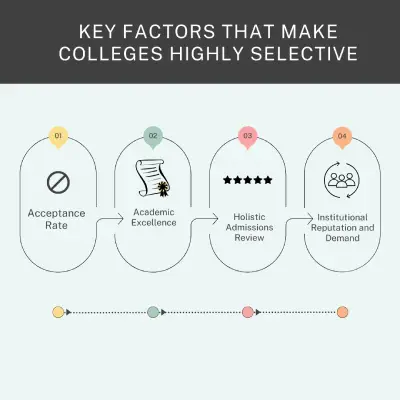
Students often ask which university is the hardest to get into, but selectivity is not determined by a single metric. Instead, the most competitive colleges evaluate applicants using multiple overlapping factors that together shape how difficult admission truly is.
Acceptance rate is one of the clearest indicators of selectivity. Colleges that admit fewer than 10% of applicants are considered extremely competitive, as thousands of highly qualified students compete for a limited number of seats. Lower acceptance rates reflect both high demand and strict admissions standards.
Highly selective colleges expect students to demonstrate sustained academic strength throughout high school. This typically includes:
Academic performance is viewed in context, but top colleges look for students who have challenged themselves at the highest level available.
Beyond academics, most elite universities use a holistic admissions process. Admissions officers closely evaluate:
This approach allows colleges to understand a student’s character, motivation, and potential contributions to campus life, not just their grades.
Colleges with strong global reputations naturally attract a much larger and more competitive applicant pool. High rankings, research output, and alumni success increase demand, which in turn raises selectivity.
Together, these factors explain why gaining admission to top colleges requires more than academic achievement alone. Students must demonstrate excellence, purpose, and impact across multiple areas to stand out in an increasingly competitive admissions landscape.
Applying to highly selective colleges requires early planning, academic strength, and a focused application strategy. Use these tips as a practical guide while preparing your college applications.
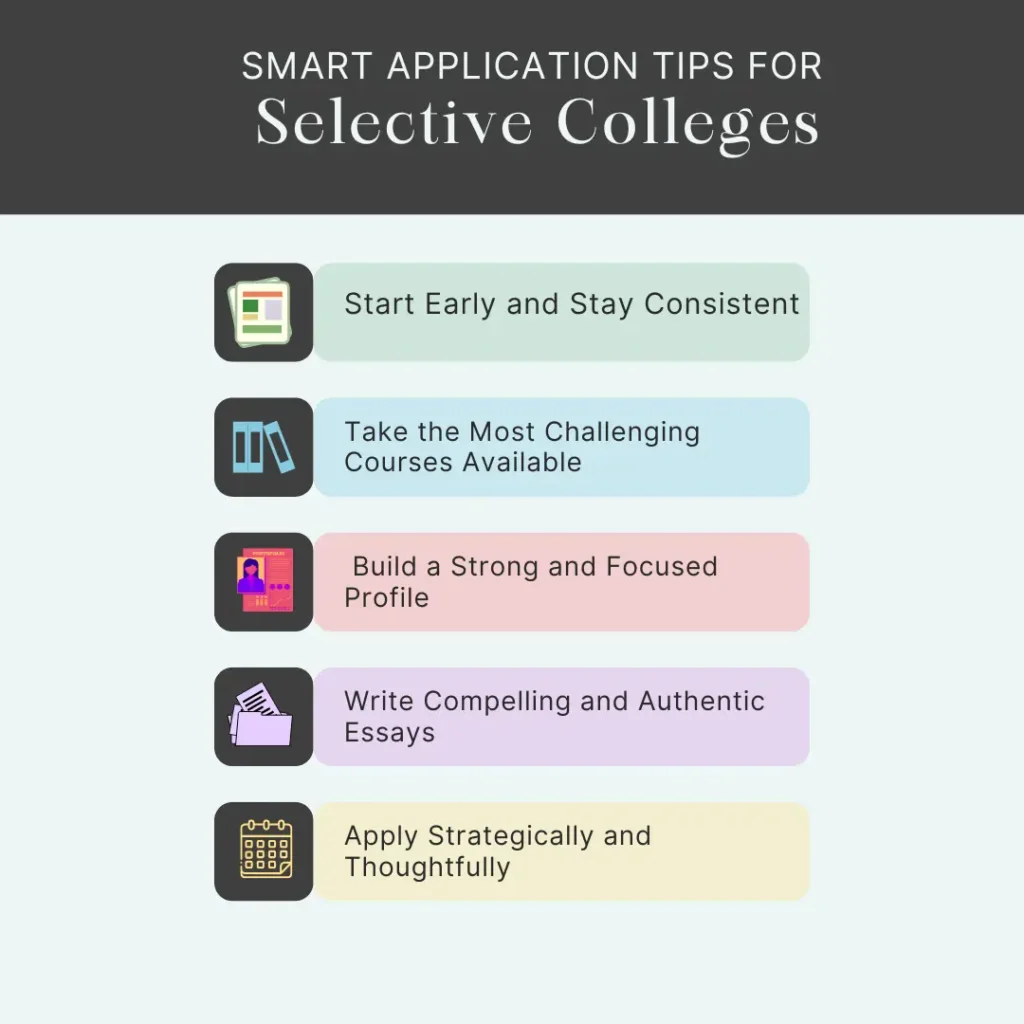
Understanding what are the hardest colleges to get into helps students set realistic goals and create stronger college applications. While elite universities are highly competitive, success depends on preparation, persistence, and finding the right academic fit—not just prestige.
There is no single “hardest” college, but universities such as Harvard University, Stanford University, and the California Institute of Technology (Caltech) are widely considered among the most selective. In recent admissions cycles, these institutions reported acceptance rates between 3% and 4%, meaning only about 3-4 out of every 100 applicants are admitted.
Many top-performing students attend Ivy League universities or other elite private institutions. However, not all choose private colleges. Some enroll in honors colleges at top public universities, which offer strong academics, research opportunities, and lower tuition, especially for in-state students.
Not always. While the listed tuition at selective colleges can be high, many offer generous need-based financial aid. Several top universities meet 100% of demonstrated financial need, meaning eligible students may pay significantly less than the sticker price.
Many colleges in the U.S. follow test-optional or test-free admissions policies, meaning SAT or ACT scores are not required. Some highly selective universities, such as Columbia University, remain test-optional. However, several top colleges have reinstated testing requirements, and policies can change by admission cycle. Students should always check each university’s official admissions website for the most up-to-date requirements.